


The WELL Building Standard (WELL) combines design and construction best practices with proven, evidence-based strategies for improving health and wellness. According to WELL, this is the "first standard of its kind that focuses solely on the health and wellness of building occupants". The standard features 10 core concepts and clearly maps out the preconditions that are required and optimisations that are encouraged for each facet.
what are the WELL Building Standards core concepts?
AIR
Poor air quality can have detrimental effects to human health. As we spend up to 90% of our time indoors WELL recognizes the importance of maintaining good indoor air quality, by reducing sources of contamination and ensuring effective ventilation.
Preconditions: 4, Optimisations: 10, Points available: 20
WATER
The Water concept highlights the importance of the access and quality of water, essential for both hydration and proper sanitation. Inadequate water management can negatively affect human health so buildings must provide high-quality drinking water and effectively manage water systems to prevent contamination and excessive moisture while supporting hygiene.
Preconditions: 3, Optimisations: 5, Points available: 14
NOURISHMENT
Poor nutrition is a leading contributor to global disease and mortality. Promoting healthy eating by providing fruits and vegetables and nutritional transparency are requirements of the concept. While optimisations encourage the creation of food environments, where the healthiest choice is the easiest choice.
Preconditions: 2, Optimisations: 12, Points available: 16
LIGHT
The Light concept promotes creating lighting environments that support visual, mental and biological health. Poor lighting conditions can dysregulate the circadian rhythm, cause visual discomfort, and negatively affect overall well-being. Thoughtful lighting design can support visual and biological needs by providing appropriate daylight access, electric lighting design and glare control.
Preconditions: 2, Optimisations: 7, Points available: 18
MOVEMENT
WELL recognizes that environmental design, policies and programmes can ensure that physical activity is integrated into daily routines. Physical inactivity has been a public health concern for decades, as it can contributes to the development of both physical and mental health disorders. Thoughtful layout, accessible amenities and supportive policies can be utilised to promote movement, reduce prolonged sitting and support active lifestyles.
Preconditions: 2, Optimisations: 8, Points available: 21
THERMAL COMFORT
This concept aims to improve productivity by maximising thermal comfort for all building users. Thermal comfort is subjective so opting for improved HVAC systems that enable thermal zoning, and meet individual temperature preferences, creates baseline satisfaction for the largest number of the buildings occupants.
Preconditions: 1, Optimisations: 9, Points available: 16
SOUND
The Sound concept provides a comprehensive approach to provide acoustic comfort through research-based design considerations. Poor acoustic conditions negatively impact concentration, communication and overall well-being. Acoustic zoning and the use of acoustic materials help manage noise, reverberation and sound privacy to support inhabitant comfort, productivity and health.
Preconditions: 1, Optimisations: 10, Points available: 18
MATERIALS
The aim of the Materials concept is to reduce human exposure to environmental contaminants and harmful chemicals that get introduced indoors during construction, remodelling, furnishing and building operations. This concept provides a guide for restricting and managing materials that contain legacy chemicals, VOCs, PFCs, heavy metals and HFRs, ensuring the protection of human health.
Preconditions: 3, Optimisations: 8, Points available: 21
MIND
The Mind concept promotes mental health through policy and design strategies, addressing various factors that influence cognitive and emotional well-being. WELL values the built environment’s role and the importance of creating spaces that reduce stress, support focus, and foster a sense of comfort and psychological safety.
Preconditions: 2, Optimisations: 10, Points available: 19
COMMUNITY
This final concept considers how an organisation instils a culture of health, accommodates inclusivity and fosters an engaged community. The Community concept sees that policies programmes and organisational practices play critical roles in supporting equity, safety, social connection and overall well-being. It also offers the greatest number of opportunities to score points, reflecting the wide range of strategies available to support people and communities.
Preconditions: 4, Optimisations: 17, Points available: 46
In addition to the 10 core concepts, The Innovation Concept, addresses novel strategies that are not yet covered by the existing WELL features. Points may be through achievement of other Green Building certificates, inclusion of a WELL Accredited Professional on the project team, provision of WELL training course and the implementation of novel science-based innovative strategies that enhance occupant well-being or advance carbon reduction and disclosure practices.
Preconditions: 0, Optimisations: 6, Points available: 28
How is the WELL Standard Scored?
Each precondition must be met but does not contribute any points to the scoring system. Points are achieved through meeting the optimisations but projects may earn no more than 12 points per core concept and no more than 100 points per project across all ten concepts. An additional 10 points may be earned under The Innovation concept, resulting in a maximum possible score of 110.
There are 4 different certification levels that a building can achieve: WELL Bronze, WELL Silver, WELL Gold and WELL Platinum. To achieve each level, you must score at least 40 (Bronze), 50 (Silver), 60 (Gold) or 80 (Platinum) optimisation points across the 10 concepts and have a minimum of 0 (Bronze), 1 (Silver), 2 (Gold) or 3 (Platinum) points per concept.
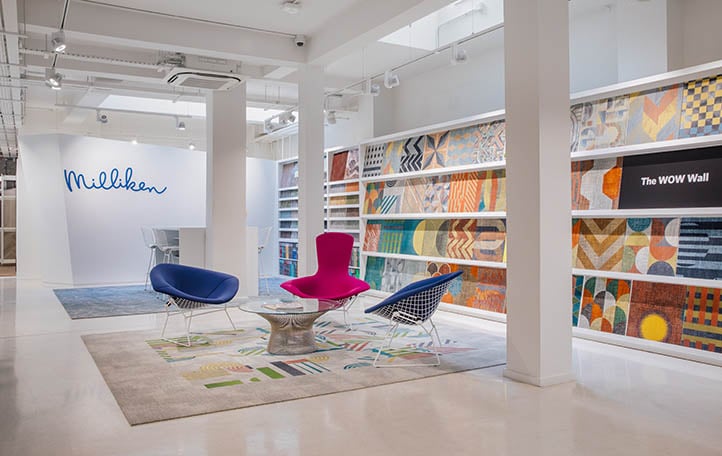
Milliken’s London showroom first achieved a WELL Platinum certification in 2021 and has since undergone the recertification process to retain the highest standard of WELL. To learn how Milliken first achieved this exemplary award read our blog ‘How Milliken Achieved WELL Platinum Certification for its London Showroom’.
What's The Difference between WELL, LEED & BREEAM?

In some areas, the criteria required to meet the WELL standard are similar to those required to meet LEED and BREEAM certification standards. This makes sense: all three building standards aim to encourage best practices in design and construction, with emphasis on creating healthy buildings.
However, the biggest difference between these certifications is where they focus: LEED and BREEAM look at the environmental performance of buildings, encouraging the use of sustainable materials and building practices; whereas WELL focuses on the experience of the people using the building, working to improve human health and wellness through building design.
Sustainability has been a design and construction priority for so long now that most companies have made it a key part of their process. With people spending 90% of their time indoors, creating a healthy indoor environment is increasingly important. The WELL Building Standard shifts construction priorities away from sustainability, and onto user health and wellness.
What is Works with WELL?
The Works with WELL license provides assurance that products or services contribute to achieving WELL Standard certifications, offering trusted solutions for those designing spaces that support health and well-being. The WELL directory enables designers to easily connect with verified organisations and products, helping to integrate health-focused design. Milliken flooring is a featured product provider, demonstrating third-party verification and alignment with WELL’s core concepts.
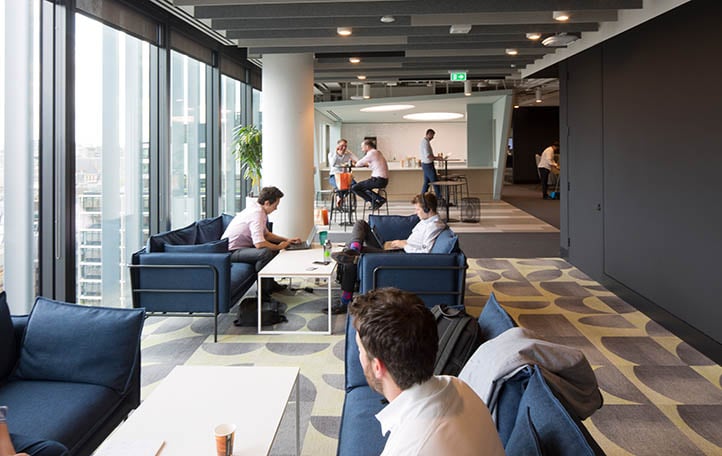
Deloitte were awarded a WELL Gold certification for their London office, read about how Milliken flooring helped them achieve this in their case study.
FAQs
What is The WELL Building Standard?
A globally recognised certification that focuses on how building design can support human health and well-being. The WELL standard is divided into 10 core concepts and provides a framework for designing, operating and maintaining buildings.
How many points can be scored in the WELL Air concept?
A maximum of 12 points per concept can be scored however there are 20 points available across 10 optimisations. As well as scoring points a project must also meet the 4 preconditions.
How many points can be scored in the WELL Water concept?
A maximum of 12 points per concept can be scored however there are 14 points available across 5 optimisations. As well as scoring points a project must also meet the 3 preconditions.
How many points can be scored in the WELL Nourishment concept?
A maximum of 12 points per concept can be scored however there are 16 points available across 12 optimisations. As well as scoring points a project must also meet the 2 preconditions.
How many points can be scored in the WELL Light concept?
A maximum of 12 points per concept can be scored however there are 18 points available across 7 optimisations. As well as scoring points a project must also meet the 2 preconditions.
How many points can be scored in the WELL Movement concept?
A maximum of 12 points per concept can be scored however there are 21 points available across 8 optimisations. As well as scoring points a project must also meet the 2 preconditions.
How many points can be scored in the WELL Thermal Comfort concept?
A maximum of 12 points per concept can be scored however there are 16 points available across 9 optimisations. As well as scoring points a project must also meet the precondition.
How many points can be scored in the WELL Sound concept?
A maximum of 12 points per concept can be scored however there are 18 points available across 10 optimisations. As well as scoring points a project must also meet the precondition.
How many points can be scored in the WELL Material concept?
A maximum of 12 points per concept can be scored however there are 21 points available across 8 optimisations. As well as scoring points a project must also meet the 3 preconditions.
How many points can be scored in the WELL Mind concept?
A maximum of 12 points per concept can be scored however there are 19 points available across 10 optimisations. As well as scoring points a project must also meet the 2 preconditions.
How many points can be scored in the WELL Community concept?
A maximum of 12 points per concept can be scored however there are 46 points available across 17 optimisations. As well as scoring points a project must also meet the 4 preconditions.
How does a building achieve a WELL Bronze certification?
The WELL Standard Bronze certificate is achieved by scoring 40 points across the 10 core concepts.
How does a building achieve a WELL Silver certification?
The WELL Standard Silver certificate is achieved by meeting all the preconditions and scoring 50 points across the 10 core concepts with a minimum of 1 point per concept.
How does a building achieve a WELL Gold certification?
The WELL Standard Gold certificate is achieved by meeting all the preconditions and scoring 60 points across the 10 core concepts with a minimum of 2 points per concept.
How does a building achieve a WELL Platinum certification?
The WELL Standard Platinum certificate is achieved by meeting all the preconditions and scoring 80 points across the 10 core concepts with a minimum of 3 points per concept.
How is the WELL standard different from LEED and BREEAM?
LEED and BREEAM focus primarily on environmental sustainability and resource efficiency while WELL is specifically designed to assess occupant health and well-being.
How is the WELL standard scored?
To earn any WELL certificate all the preconditions must be met. Points are awarded to projects that implement the optimisations. A maximum of 12 points can be earnt per core concept and a maximum of 10 may be earned under The Innovation concept resulting in a maximum possible score of 110.
What is a WELL Accredited Professional (WELL AP)?
An individual with strong understanding of The WELL Building Standard, and its application in the design, construction, and operation of healthy buildings and communities. WELL Accredited Professionals are qualified to support projects teams in implementing WELL strategies and guiding projects through the certification process.
How do you become a WELL Accredited Professional (WELL AP)?
Candidates must pass the WELL AP exam, which is administered by the International WELL Building Institute (IWBI). Once certified WELL APs must maintain their credential through continued education to ensure knowledge remains current as the standard evolves.


