


In the face of the escalating climate crisis immediate action is essential. Our current “throwaway” economy will continue to cause irreversible damage unless we are able to close the loop on material consumption. Moving towards a more circular future requires completely rewiring the linear systems of production and consumption that are harming the natural systems that support life. Alarmingly, global material extraction has surpassed 100 billion tonnes, more than three times as much than 50 years ago. Without much needed change this is set to rise by a further 60% by 2060[i]. This blog details the actionable steps Milliken’s taking to advance the circular economy and mitigate climate change.
Recycle: How Does Milliken Use Recycled Materials in Flooring?
Milliken’s circular story starts with using recycled materials. Globally, secondary (recycled) material consumption is trending upwards, however it’s being vastly outpaced by virgin material use, causing the circularity metric (percent of secondary materials use of overall consumption) to decline to 6.9% this year.[i] Secondary materials only make up a tiny proportion of all the materials entering the economy which is why Milliken tries to maximise the amount of recycled content that goes into our flooring products without compromising quality. The graph below highlights the recycled content in each of our flooring products.
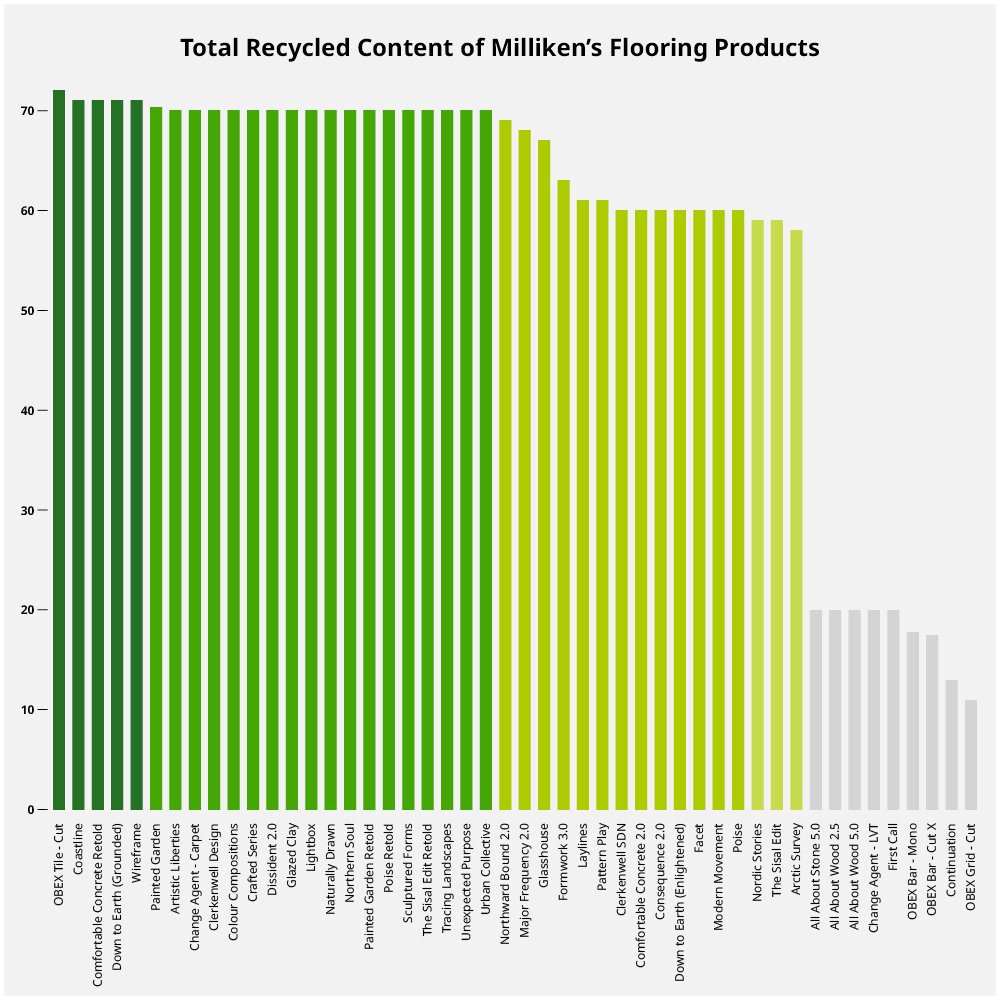
Want to know more sustainability credentials for each product view the matrix here.
Recycled content of WellBAC® Cushion
All Milliken carpet collections include WellBAC® open cell cushion backing. It not only offers excellent underfoot comfort and acoustic benefits but is also made from 90% recycled polyurethane. Another benefit to open cell cushion backing is that it also extends the life of a carpet tile by up to an additional 5 years, by protecting the face from wear. Designing durable products that are made to last with secondary materials is a clear example of how Milliken takes a multi-faceted approach to circularity.
Closing the loop with ECONYL® nylon
18 Milliken modular carpet collections use ECONYL® regenerated nylon, a circular yarn made entirely from waste that’s endlessly recyclable. Aquafil repurposes nylon waste from many pre/post-consumer waste streams (old carpets, fishing nets, garments and industrial waste). The fishing nets are primarily sourced from the fishing industry but include recovery from the marine environment through a partnership with Healthy Seas. Recovering even small quantities of litter from the seabed majorly impacts marine life and fosters healthier seas all while repurposing waste. Milliken partnered up with Aquafil® to sponsor Healthy Sea’s first ghost net reclamation dive in the UK. Ghost nets are fishing nets that have been left behind or lost at sea. If they aren’t recovered, they will continue to kill marine animals and release micro-plastics into the ocean. The dive recovered fishing nets, repurposing them into new ECONYL® for manufacturing into new carpets.
ECONYL®’s innovative regeneration system takes this nylon waste and depolymerises it to make brand-new nylon with much reduced environmental impacts compared to virgin oil-based nylon. ECONYL® has 74% reduced carbon emissions compared to Aquafil’s standard nylon and a carbon footprint of only 1.69 Kg/CO2, paving the way for premium quality and environmental responsibility to coexist in a continuous loop.

Thrive® matter: The world’s lowest carbon nylon
Thrive® matter from Universal Fibers® is hailed as their most sustainable product to date. It is made from 100% post-industrial resin, re-routing waste into finished product that is fully recyclable and has a total recycled content of 90%. Thrive® matter Nylon 6 has an embodied carbon of 1.19Kg/CO2, the lowest carbon footprint in the industry. Four Milliken carpet collections feature Thrive® matter nylon 6.
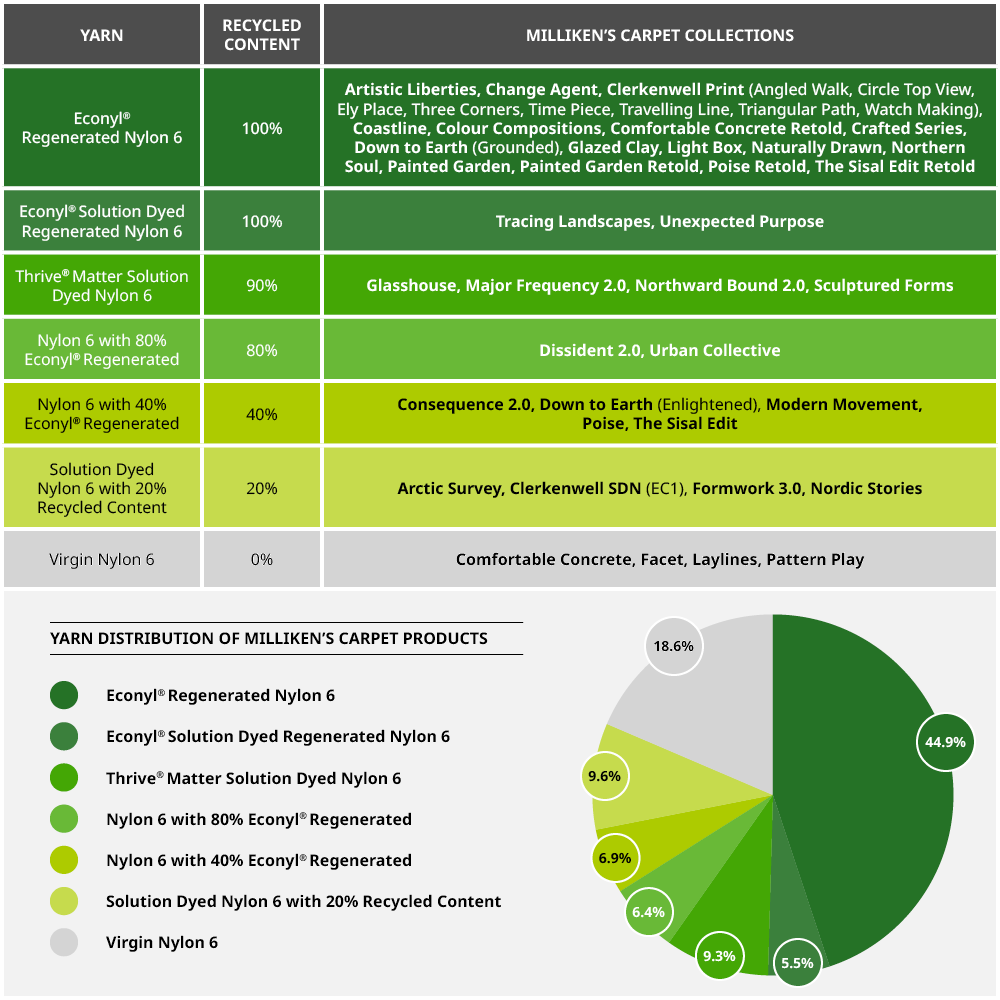
Incorporating recycled yarns into Milliken collections helps reduce raw materials use, supporting the circular movement whilst lowering the embodied carbon of products. The figure below shows the 7 types of yarn (all nylon 6 for high performance and recyclability) that are used in Milliken’s carpet collections. The pie chart highlights the proportion of carpet products that use each yarn, highlighting that over half of their product range is made with 100% recycled yarn.
Reduce: What Circular Strategies does Milliken Flooring Implement to Reduce Waste?
While recycling is essential, a truly circular economy needs to be resource light. This means utilising circular strategies that minimise waste from the outset. For this strategy to reap success systematic changes in how businesses and governments manage resources and a shift in everyday consumer habits are required.
There’s a real need to challenge increasingly prevalent “disposable attitudes” such as favouring short-lived, easily replaceable products; treating resources as infinite; and choosing to buy new simply for convenience. All these behaviours reinforce our linear throwaway economy hindering the progression to a circular future. Milliken focuses on reducing waste at every stage whilst ensuring its products are designed to last longer, perform better and minimise environmental impact.
Carpet tiles vs Broadloom
Carpet tiles naturally support waste reduction thanks to their modular design. While some off-cut waste during installation is inevitable, this is typically only 3-5% for carpet tile. Broadloom carpet generates significantly more waste especially when fitting irregular or L-shaped rooms. For example, over 50% of the product can become offcut waste for these floor plans. Beyond installation waste, carpet tiles are much easier to maintain: if staining or damage occurs, it is easy to replace individual modules without disrupting the entire floor. With broadloom carpets, typically a much larger area or the entire room needs replacing resulting in even more waste and often poor finishes due to seaming difficulties.
Mash Up: a creative waste solution
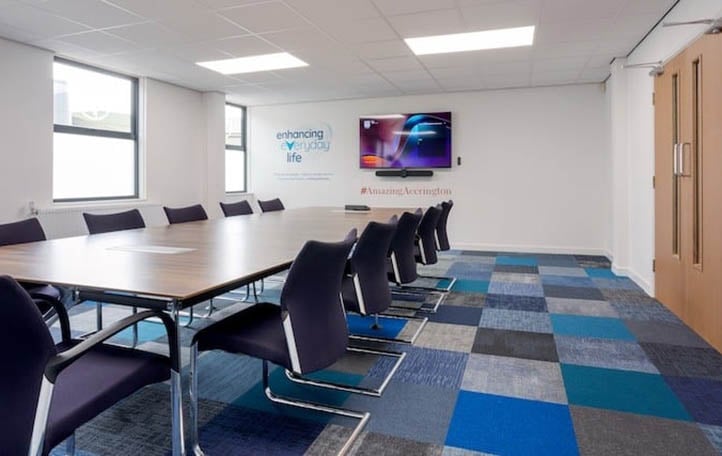
As we all strive towards developing a more circular economy, the Mash Up Collection is a perfect example of circular thinking. It allows Milliken to offer their great quality carpet at a fraction of the price all while keeping carpet tile waste to an absolute minimum. In the past, excess carpet tiles from overruns, new product development materials, excess inventory and unused samples were destined for waste. Milliken’s Mash Up Collection provides a more circular solution that retains some of these excess tiles, using them for their intended purpose of high-quality flooring. Tiles are grouped into 6 usable palettes to offer mixed, visually cohesive combinations that can create subtle to striking effects on the floorscape.
Reuse: Extending the Life of Flooring with Circular Economy Strategies
Milliken’s circular approach continues with reuse, aiming to keep products in circulation for as long as possible before they even become waste. While reducing material extraction and consumption tackles the problem at its source, reusing already extracted materials is what will support and sustain the circular economy. Reuse allows products to provide value far beyond a singular life cycle.
Milliken incorporates reuse by designing products that are built to withstand multiple life cycles; through innovative product design and take back programmes that enable reuse.
Products Engineered with Reuse in Mind
Milliken designs products with disassembly in mind, they’ve developed a glue-free installation system to protect your floorings future reuse possibilities.
TractionBack® 2.0, a backing option that’s ideal for reuse and can be added to any of Milliken’s carpet collections. TractionBack® 2.0 grips to the subfloor without the need for any adhesive, allowing for cleaner, glue-free installations that come with an array of benefits. Maximising reuse potential is one such benefit, tiles can be easily picked up, reconfigured and re-laid many times over without causing damage to the tiles or subfloor.
Want a glue-free solution for resilient flooring? Milliken’s 5mm LVT collections (All About Stone 5.0, All About Wood 5.0, Change Agent, First Call) can be installed with IOBAC Tab-It® ultra-thin dry-tack tabs. Similarly to TractionBack® 2.0, IOBAC Tab-It tabs help protect both the planks and subfloor from adhesive damage and contamination, meaning they can also be reconfigured and reused repeatedly.
Milliken’s N/XT Life™ Programme
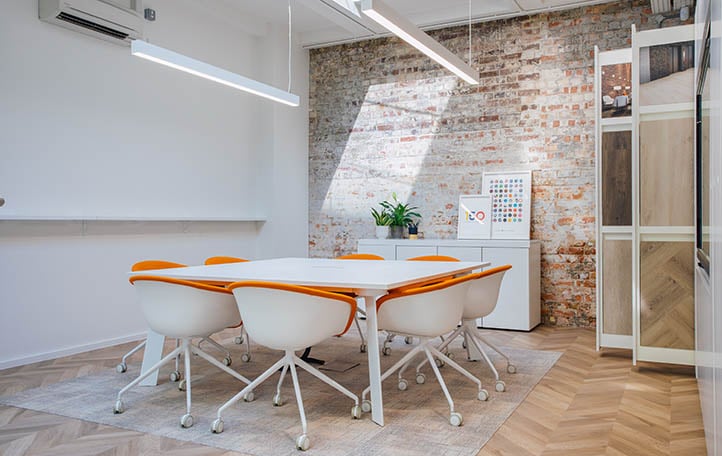
Today less than 3% of all carpet tiles get reused or recycled, in response to this Milliken has launched the N/XT Life™ programme. The core goal is to remove, reuse and resell carpet tiles, giving them a second chance at life. Milliken has partnered with Orak, Uplyfted, ReCarpet, Encore by Weltek and The Salvation Army to provide many routes to carpet tile reuse across Europe. Learn more about our partnerships with Orak and Uplyfted by clicking the links and reading their case studies.
.jpg?width=722&height=456&name=Atypix%20-%20Orak%20-%2048%20(WEB).jpg)
Specifying reuse carpet tiles brings both financial and environmental benefits. For every square metre of carpet tile that is reused 4kg in material waste, up to 8kg in CO2 emissions and 40L of water is saved. Economically, buying fewer new tiles reduces material costs and there’s potential to sell your used tiles creating revenue that offsets part of the cost. In the end, the total cost of the flooring renovation project is reduced – especially as waste disposal costs go down. Milliken and Orak estimate that choosing reuse offers a return on investment through the extended lifespan of the flooring and the value of used tiles.
FAQs
What is a circular economy?
A circular economy is a resource-light system that minimises material extraction, reduces waste, and prioritises keeping materials in use for as long as possible.
What is the circularity gap?
The circularity gap refers to the percentage of global material use that comes from virgin (raw) materials. The aim of circularity is to close this gap by reducing material extraction and maximising the use of secondary materials.
What is the circularity metric?
The circularity metric measures the share of secondary material use globally. Currently, only 6.9% of overall material use comes from secondary (recycled) materials, a figure that is declining.
What is global material extraction?
Global material extraction is the total amount of raw materials taken from the Earth’s resources. It has already surpassed 100 billion tonnes per year and is projected to rise by a further 60% by 2060.
What are secondary materials?
Secondary materials are recycled resources that are reintroduced into the economy and used in the production of new materials rather than being wasted.
What are virgin materials?
Virgin materials are raw resources extracted directly from the Earth. They are considered primary materials because they have not been recovered or recycled from previous products.
Does Milliken flooring use recycled materials?
Yes. All Milliken flooring products incorporate some recycled content. For certain collections, this can be as high as 71%.
What type of yarn does Milliken use in its carpet collections?
Nylon 6 yarn is used in all Milliken carpet collections to ensure high performance and recyclability. However, the recycled content of the nylon 6 varies by collection, with over half of Milliken’s carpet tiles made from 100% recycled nylon.
What is ECONYL® nylon?
ECONYL® is a regenerated nylon made entirely from nylon waste, such as fishing nets and old carpets. As it is also endlessly recyclable, it is considered a truly circular yarn.
What is Thrive® matter nylon?
Thrive® matter nylon 6 is made from 100% post-industrial resin waste, contains 90% recycled content, and has one of the lowest carbon footprints in the industry.
How do carpet tiles reduce waste during installation?
Carpet tiles typically generate only around 3–5% offcut waste, compared to broadloom carpet, which can exceed 50% waste in irregular spaces.
How does Milliken enable reuse?
Milliken products are compatible with glue-free installation systems such as TractionBack® 2.0 and IOBAC Tab-It®, allowing carpet tiles and LVT planks to be lifted and reused many times without causing damage to the tiles or subfloor.
What is the N/XT Life™ programme?
N/XT Life™ collects, reuses, and resells carpet tiles through partnerships, giving them a second life, reducing waste and advancing the circular economy.
What are the benefits of choosing reused carpet tiles?
Reused carpet tiles save approximately 4 kg of material waste, up to 8 kg of CO₂, and 40 litres of water per m², while also lowering overall project costs.
What third-party circularity certifications does Milliken flooring have?
All Milliken carpets are Cradle to Cradle Certified® Silver, a third-party verification that assesses five categories: Material Health, Product Circularity, Climate Protection, Social Fairness, and Water and Soil Stewardship.
What sustainability certifications do Milliken flooring products have?
All Milliken flooring products have Environmental Product Declarations (EPDs) that include full Life Cycle Assessments (LCAs), are certified for low VOC emissions, and are manufactured in ISO-compliant facilities to ensure responsible and safe manufacturing. All Milliken carpets are also Cradle to Cradle Certified® Silver and DECLARE® Red List Free.
[i] . International Resource Panel (IRP). (2024). Global Resources Outlook 2024: Bend the trend: Pathways to a liveable planet as resource use spikes. United Nations Environment Programme: Nairobi. Retrieved from: UNEP website 3. Our analysis does not consider technical and economic feasibility. 4. IRP. (2024). Global Resources Outlook 2024: Bend the trend. Pathways to a liveable planet as resource use spikes. UNEP: Nairobi. Retrieved from: UNEP website
[ii] The Circularity Gap Report, 2025 powered by Circle Economy.


